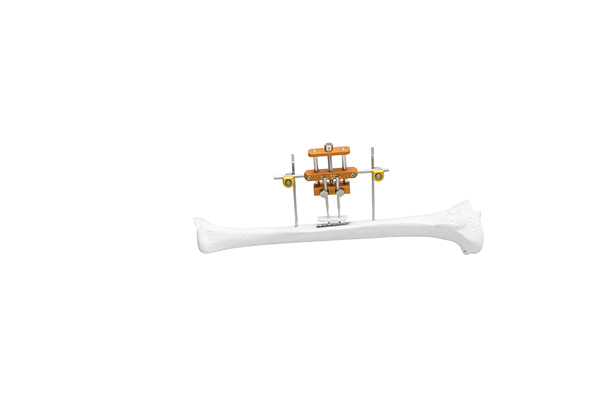
Tibia transverse bone transport (TTT), an innovative orthopedic procedure derived from Ilizarov’s tension-stress principle, has revolutionized the treatment of chronic lower extremity ischemic conditions, particularly diabetic foot ulcers. This minimally invasive technique involves creating a small cortical bone window on the medial tibia, typically 3–5cm distal to the tibial tuberosity, and gradually transporting this segment transversely using an external fixator.
The core mechanism lies in distraction histogenesis—slow, controlled traction stimulates angiogenesis, microcirculation reconstruction, and tissue regeneration in the ischemic limb. Following a short latency period, the bone segment is moved at 1mm/day, often using the “accordion technique” (2 weeks outward, 3 days fixation, then reverse transport). This process activates pathways like HIF-1α-VEGF, boosting blood flow and promoting wound healing.
TTT addresses severe ischemia where conventional revascularization fails. Clinically, it achieves over 96% limb salvage and wound healing rates for Wagner grade 3–4 diabetic foot ulcers, with low complication risks (2% fracture, 8% pin-site infection). Beyond diabetes, it treats thromboangiitis obliterans and non-healing ischemic ulcers.
Technological advancements, such as 3D-printed osteotomy guides, enhance surgical precision. As a versatile, effective limb-salvage option, TTT bridges orthopedics and vascular care, preserving mobility and quality of life for patients with challenging ischemic conditions.